The Development of Muslim Identity and Two-Nation Theory and Quaid-e-Azam
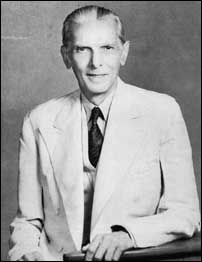
M. A. Jinnah was a history-making leader who changed the course of history. He possessed a visionary leadership, commitment to the cause and political mobilization capacity. He was a Charismatic Leader in the real sense of the meaning.
ROLE OF JINNAH
Jinnah played a decisive role in articulating the Muslim demands and pursuing these faced strong opposition from the Hindus and the British. He started his political career in 1906 by joining the Indian National Congress. He was elected to the Legislative Council in 1909 and in 1913 he also joined the All India Muslim League (AIML). Now he was member of both the political parties. Having disagreement with Gandhi on the issue of Swaraj (self-rule), complete freedom from the British and on using extra-constitutional means, Jinnah resigned from the Congress in 1920.
His early efforts to promote Hindu-Muslim unity were materialized when The Lucknow Pact (1916) was signed. The Hindus accepted the Muslim demands:
-
Separate Electorate
-
One-third Seats in Central Legislature
-
Protection of minority rights
In the Nehru Report, the accepted Muslim rights were ignored. Jinnah retaliated forcefully by presenting 14 Points in 1929.
He defined Muslim identity and mobilized them with reference to Islam and convinced others that Muslims are different from the Hindus and the Congress. Islamic principles, concepts and symbols surfaced in his speeches and statements.

Previous

TOC

Next